Transforming Temporary Traffic Management

Client

Auckland Transport

Service

Home

Text Link

Supporting Auckland Transport to shift from a prescriptive approach to more proactive, risk-based Temporary Traffic Management across the road network.

Background

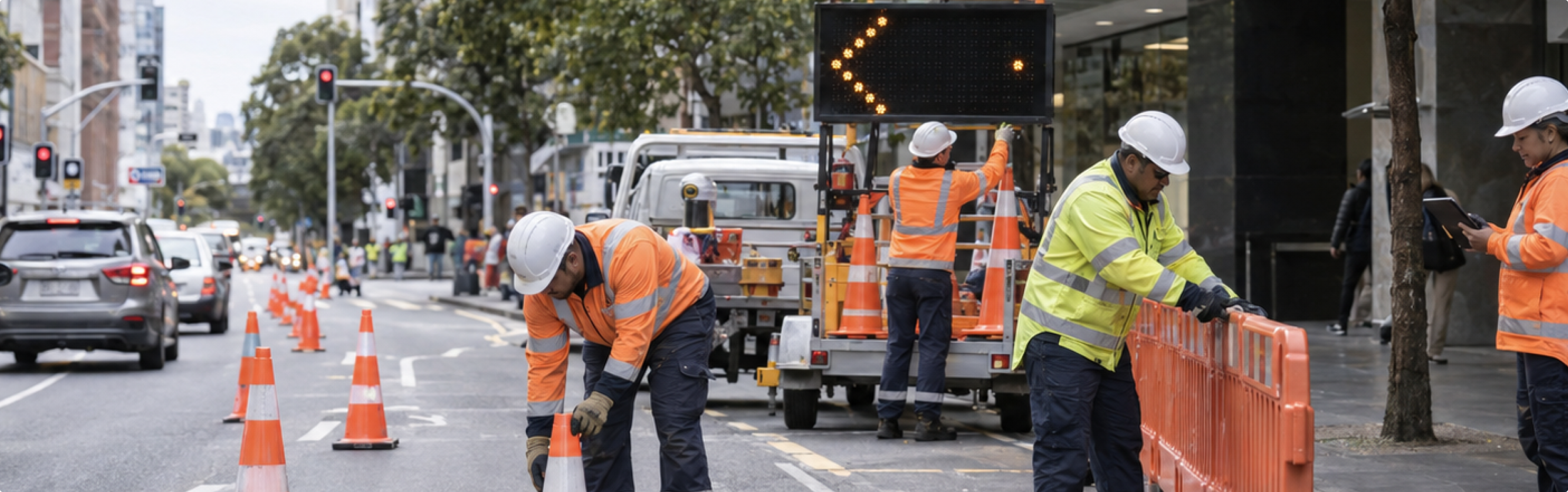
Temporary Traffic Management (TTM) plays an important role in enabling work to take place across Auckland's road network while balancing safety, access and network performance.

The introduction of the New Zealand Guide to Temporary Traffic Management (NZGTTM) represented a significant change for Auckland Transport (AT) as Auckland's main Road Controlling Authority (RCA). It required a move away from the more prescriptive approach associated with the Code of Practice Temporary Traffic Management towards a framework based on risk, judgement and site-specific decision-making.

While the immediate requirement was to prepare the RCA and industry for NZGTTM, it became clear that this was not simply a change in technical standard. It represented a broader, system-wide change, requiring different behaviours, capabilities and ways of working across the TTM system.

Opportunity

The existing operating model had largely been developed around a compliance and processing environment. Teams were managing significant volumes of Corridor Access Requests (CARs), Traffic Management Plans (TMPs), network coordination activities, site assurance and asset reinstatement inspections, with much of the work focused on responding to individual applications and worksites. The transition to NZGTTM highlighted the limitations of this model.

A risk-based approach requires the RCA to understand the wider context in which work is taking place, engage earlier with those planning work, apply professional judgement and consider the cumulative impact of activities across the network. It also requires PCBUs i.e. those procuring and building the works to take greater ownership of identifying and managing their risks, rather than relying on the RCA to prescribe the solution.

This created an opportunity to look beyond the implementation of NZGTTM and consider how AT’s wider approach to TTM could evolve to better support this way of working.

The opportunity became: How could AT move from managing individual applications and worksites to proactively managing risk, relationships and activity across the network?

Approach

A human-centred approach was used throughout the programme to understand how the transition was being experienced by the people responsible for putting it into practice.

This included working closely with RCA teams to understand existing processes and pain points, engaging directly with the industry, using pulse surveys to understand confidence and readiness, and adapting training and communications in response to feedback. This was particularly important because the transition required a significant mindset shift.

For some team members, existing ways of working had been established over many years. Moving from checking compliance against prescribed requirements to assessing whether risk had been appropriately identified and managed required greater professional judgement and confidence. Training alone could not deliver that shift. Practical experience, coaching, peer discussion, leadership support and reinforcement through day-to-day decision-making were equally important.

Purple Shirt worked alongside AT to develop a capability uplift programme to prepare the RCA for the transition. This combined external training with practical resources, guidance and ongoing reinforcement to help teams apply risk-based principles in their day-to-day roles.

Particular attention was given to helping CAR reviewers change the nature of their conversations with applicants. Rather than prescribing a particular TTM solution, reviewers were encouraged to challenge the applicant's reasoning and ask them to demonstrate how risks had been identified, assessed and managed.

Internal feedback loops provided a way to monitor understanding and confidence over time, with pulse survey results indicating an increase in NZGTTM knowledge across the team.

AT recognised early that successful implementation could not be achieved through internal change alone. Applicants, contractors, TTM designers, utilities and other road corridor stakeholders also needed to understand both the technical requirements and the change in expectations associated with NZGTTM.

A programme of industry webinars and supporting communications was introduced to explain the transition and provide practical guidance.

The emphasis was not simply on communicating a new standard, but on building a shared understanding of why the approach was changing and what good risk-based decision-making looked like.

,  

Outcomes

The transition has helped AT to:

  • Strengthen capability within the RCA, with pulse survey results indicating an increase in NZGTTM knowledge across the team.
  • Support greater understanding of risk-based TTM across industry through webinars, communications and practical guidance.
  • Support CAR reviewers to change the nature of their conversations with applicants, with greater emphasis on applicants demonstrating how risks have been identified, assessed and managed.
  • Establish a clearer direction for how AT’s approach to TTM can continue to evolve, moving beyond the reactive management of individual road corridor activities towards more proactive, risk-based stewardship of the network.

More broadly, the programme highlighted that successful risk-based TTM depends on the alignment of people, capability, operating model, industry relationships, systems and data.

Our latest work

View all case studies